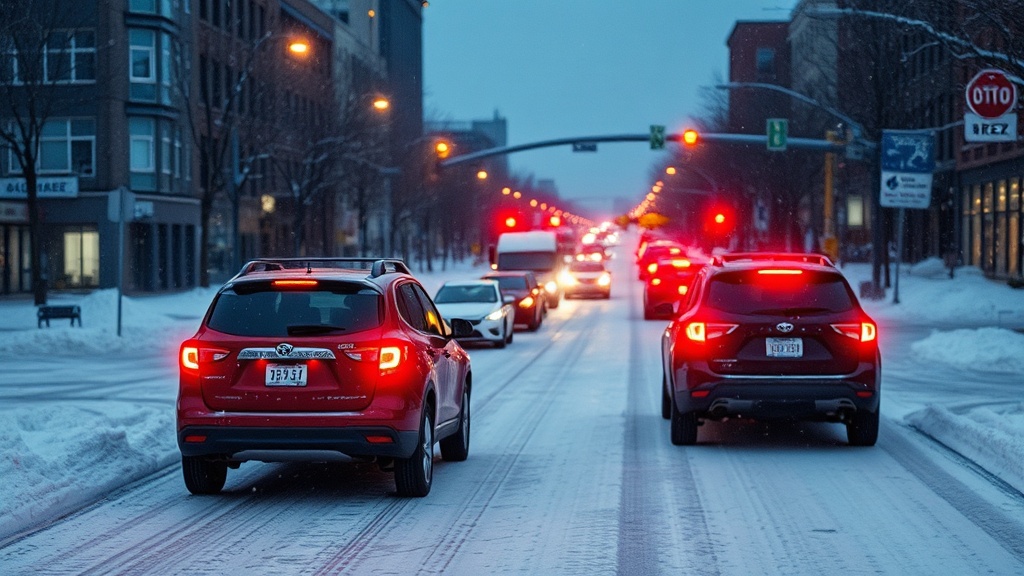
What Ottawa Residents Should Know About Winter Parking Bans and Snow Routes

Why Do So Many Ottawa Drivers Get Caught Off Guard by Parking Bans?
There's a persistent myth in our city that winter parking restrictions are predictable — that if you simply watch the weather forecast, you'll know when to move your car. The reality? Ottawa's parking ban system is more nuanced than most residents realize, and getting caught on the wrong side of a snow route declaration can mean an expensive tow, a ticket, and a very inconvenient morning. Whether you've lived in Centretown for decades or just bought your first place in Kanata, understanding how Ottawa's winter parking rules actually work — not how you think they work — can save you hundreds of dollars and plenty of frustration.
Ottawa operates what's called a "winter parking ban" from December 1 through March 31 each year. During this period, parking on designated snow routes is prohibited anytime a ban is declared — and declarations can happen with as little as a few hours' notice. The city maintains over 2,000 kilometres of snow routes across Ottawa, including major arterials like Bank Street, Elgin Street, and Bronson Avenue, as well as critical collector roads in suburbs like Orleans, Barrhaven, and Stittsville. When a ban is active, vehicles left on these routes are ticketed and towed without exception. The fine isn't trivial either — you're looking at a ticket plus impound fees that can easily exceed $200. For many Ottawa families, that's grocery money for the week.
Where Can I Find Real-Time Updates on Ottawa Parking Bans?
The City of Ottawa provides several channels for parking ban notifications, but not all are equally reliable. The official source is the city's winter parking ban page, which updates in real-time when bans are declared or lifted. You can also sign up for email alerts or follow the city's official Twitter account for notifications. Here's what works best for different situations:
- Email alerts: Sign up at ottawa.ca — you'll get notifications within 30 minutes of a ban declaration
- Phone hotline: Call 3-1-1 or 613-580-2400 to hear a recorded message about current restrictions
- Street signage: Look for the red and white snow route signs — they're posted at the start of every snow route in Ottawa
- Mobile apps: Several third-party apps track Ottawa parking bans, but always verify with the official city source
Here's something most Ottawa drivers don't realize: the city can declare a parking ban even when no snow is falling. If significant snowfall is forecast — particularly the heavy, wet snow Ottawa sees during spring and fall shoulder seasons — bans are often declared preventively. The logic is straightforward: plows need clear streets before snow accumulates to the point where removal becomes difficult. So that clear evening sky you're seeing from your balcony in Sandy Hill? It doesn't guarantee anything. Always check the official status before leaving your vehicle overnight on any major street.
Which Ottawa Streets Are Actually Snow Routes?
Not every street with the word "street" in its name is a snow route — but many are. Ottawa's snow route network prioritizes emergency access, transit corridors, and high-traffic connectors. In the urban core, this includes Wellington Street, Laurier Avenue, and Somerset Street. In the suburbs, expect snow route designation on major collectors like Strandherd Drive in Barrhaven, Innes Road in Orleans, and Hazeldean Road in Kanata.
The best way to know if your specific street is affected? Look for the signs. Ottawa uses standardized red-and-white snow route signage that clearly marks the beginning and end of restrictions. If you're parking on an unfamiliar street — perhaps visiting friends in Vanier or catching a show in the ByWard Market — take 30 seconds to scan for these signs before leaving your vehicle. They're not subtle; the city wants drivers to see them.
For residents in newer developments, be particularly vigilant. Ottawa's suburban expansion means new snow routes are added periodically as road networks mature. A street that wasn't a snow route last winter might be one this year. The city publishes an updated snow route map each fall — it's worth bookmarking and checking annually if you park on the street regularly.
What Happens If My Car Gets Towed During a Ban?
If you wake up to find your car missing from its spot on Somerset West or Merivale Road, don't panic — but do act quickly. Vehicles towed during Ottawa parking bans are taken to the city's impound lot at 1663 Belfast Road. You'll need to pay the outstanding ticket plus towing and storage fees before retrieving your vehicle. The impound lot operates limited hours, so if your car was towed overnight, you might be waiting until morning — and paying an extra day's storage fee.
Here's the practical reality: Ottawa tows hundreds of vehicles during major snow events. During the infamous storm of January 2023, over 1,200 vehicles were removed from snow routes across the city. The impound lot becomes a chaotic scene during these periods, with wait times stretching for hours. Bring proof of ownership, valid identification, and a payment method that can handle the total — which typically runs between $180 and $250 depending on how long your vehicle was stored.
Some Ottawa residents wonder whether fighting the ticket is worthwhile. The short answer: probably not. Ottawa's parking ban enforcement is well-documented, and the city maintains detailed records of when bans were declared, which streets were affected, and when vehicles were towed. Administrative reviews rarely overturn these tickets unless there was a clear error — like a sign being obscured or the ban being declared after your vehicle was already parked (and you can prove it).
How Can Ottawa Residents Avoid Parking Ban Headaches?
The simplest solution is also the most obvious: if you have access to off-street parking, use it during winter months. Many Ottawa homes, particularly those built after the 1980s, include driveways or garages. For those in older neighbourhoods like the Glebe, Centretown, or Lowertown — where street parking is often the only option — winter requires more strategic planning.
Consider these practical approaches that many Ottawa residents have adopted:
- Know your alternatives: Identify legal parking on non-snow-route streets within walking distance of your home. Many residential side streets in Ottawa aren't designated snow routes and remain legal for overnight parking even during bans.
- Build relationships with neighbours: If you live in a duplex or triplex with limited parking, talk to neighbours about sharing driveway space during storms. Ottawa's community spirit often extends to practical arrangements like these.
- Monitor the forecast: While weather alone doesn't determine bans, heavy snowfall predictions often precede declarations. If Environment Canada is calling for 15+ centimetres in Ottawa, assume a ban is likely.
- Set reminders: If you park on the street regularly, make checking the parking ban status part of your evening routine from December through March. It takes 30 seconds and can save you significant hassle.
For those who rely on street parking year-round, winter in Ottawa demands a shift in mindset. The city isn't trying to make life difficult — snow routes exist so emergency vehicles can navigate our streets, so buses can maintain schedules, and so commerce isn't paralyzed by accumulated snow. When you see a plow convoy working through the night on Richmond Road or Montreal Road, remember that they're clearing the way for all of us. Moving your car is a small inconvenience that enables something much larger.
Ottawa's winter parking system isn't perfect — the short notice periods frustrate many residents, and the fees hit hardest for those with the least flexibility in their budgets. But it's the system we have, and understanding how it works is infinitely preferable to learning through an expensive mistake. The drivers who handle Ottawa winters smoothly aren't luckier than anyone else; they're simply better informed.
"Winter in Ottawa isn't something you survive — it's something you prepare for. The residents who thrive are the ones who've learned to work with the city's systems rather than against them." — Local observation from 15 years in Ottawa
One final note: Ottawa's climate is changing, and our winters are becoming less predictable. The city has adjusted its snow removal protocols in recent years, and more changes are likely coming. Stay connected to official channels, read local news coverage of municipal decisions, and don't assume this year's rules mirror last year's exactly. The only constant in an Ottawa winter is that there will be snow — everything else is subject to revision.